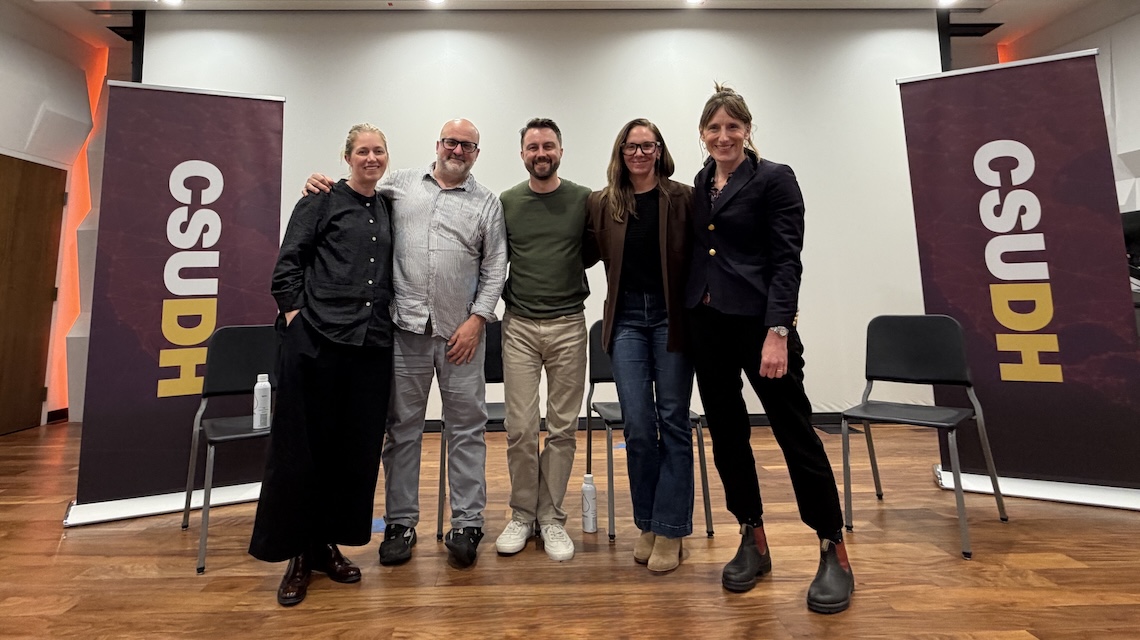
Three key filmmakers behind One Battle After Another, one of 2025’s most critically-acclaimed films, discussed the joys and challenges of moviemaking with CSUDH students on April 21.
Hosted by CSUDH’s Hollywood by Horns program with support from the Golden Globes Foundation, the event began with a screening of the action-packed, black comedy thriller. One Battle After Another, directed by Paul Thomas Anderson, follows an ex-revolutionary and his daughter as they attempt to evade law enforcement and murderous foes. Set against a backdrop of racial and political tensions, the film explores themes of intergenerational resistance and activism, familial ties, and identity.
The discussion panel following the screening featured included Oscar-winning producer Sara Murphy, Oscar-winning editor Andy Jurgensen, and Oscar-nominated cinematographer Michael Bauman. The conversation was moderated by writer/producer Emily Ziff Griffin, an active supporter of Hollywood by the Horns.
The panelists emphasized embracing failure as a learning opportunity, noting the many difficulties making the film. It was a monumental production shot primarily with VistaVision, an antiquated cinematic technique captured with film, across approximately 132 different locations.
“Things always go wrong,” said Bauman. “That’s filmmaking. You just ask: what are the essential parts of the scene? And you find a way to get there.”
Jurgensen added that unexpected hiccups can also yield creative breakthroughs. “Sometimes mistakes make things better,” he said. “You cut something out, try something new, and it improves the scene.”
Murphy, who began her career producing very low-budget projects, also stressed the importance of resourcefulness and how those early skills translated to larger productions. Anderson first began working with her because “he heard I knew how to make things for no money,” she recalled with a laugh. “Paul wanted to bring that energy and spontaneity into larger projects.”
Bauman concurred that “it doesn’t matter how much budget you have. You’ll never have enough resources, so big studio productions have the same problems as small ones.
“Good storytelling is good storytelling. You can have no equipment or effects, and the story will still resonate emotionally with people.”