Dear Toro Community,
I wish I could say that news of sexual violence on a college campus still surprises me. It does not, which deeply troubles me.
I have seen the harm that it has caused those that experienced sexual violence, and that pain further exacerbated by failed leadership. I have spent my life believing in what universities can make possible for people. That tension is held in a space where feminist scholars have long reminded us that the conditions that prompted such wanton abuse as well as a deep failure of human caretaking are everywhere. Those conditions are uncovered in the histories of figures such as César Chávez; they remain buried in governmental evasion of full accountability around the Epstein files. Indeed, they were part of the fabric of the institution of slavery.
They are not new, nor do they typically become national news. Every generation can mark their own watershed moment for grappling with the scourge of sexual violence on college campuses. For my generation, it was the rape and murder of Jeanne Clery that led to the Clery Act, a law that now requires campuses to issue timely warnings about threats to campus safety, and to share campus crime statistics.
So what does this mean for us here and now?
We have an institutional and an individual responsibility to ensure we do everything we can to foster cultures and climates where every individual is valued; where conversation around rape culture is part of our practice. To those in our campus community who have already joined this discussion with your words and your activism, thank you.
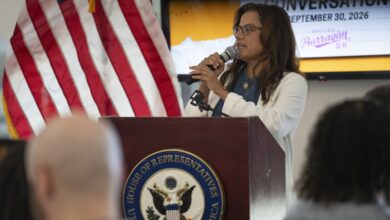
On Oct. 15 at 1 p.m., I invite you to join a conversation with local professionals who are experienced in supporting domestic and sexual violence survivors in the South LA region. This event will be hosted in Loker Student Union, Ballroom B, and is a continuation of our 2026-27 Presidential Initiative on Institutional & Community Response to Sexual Violence. I want to extend my gratitude to Dr. Corina Benavides López, associate professor and chair of the Department of Chicana and Chicano Studies; Dr. Daniel Santana, assistant professor of Mexican and Latin American history; and Mayra Romo, director of CSUDH’s Center for Advocacy, Prevention & Empowerment, for their work to make this event possible.
This initiative and its Oct. 15 event are campus investments in understanding and addressing the trauma of sexual violence. While formed following the news of Chávez’s abusive acts, the initiative’s scope is not limited to interrogating the violent legacy of that sole individual. It is intended to open dialogue on the effects of sexual violence and strengthen our ability to prevent and respond to harm.
We are witnessing a rise in online and in-real-life misogyny and misogynoir even as the academic programs (such as women’s and gender studies) that most directly confront the epidemic of sexual and gendered violence are being systematically dismantled across the country. There is too much silence around the larger issues that underlie pervasive sexual violence: the abuse of positional power, the idolatry of individuals, the painful American legacy of treating other people as property. I stay awake at night worrying about people losing their capacity for care, their willingness to confront the long traumas in the lives of people whom we know, and their dedication to naming the systemic and cultural roots that enable rape culture.
In the face of such cruelty as was demonstrated at Cornell, it can be challenging to keep going and to move with faith in the kindness of our fellow humans. But perhaps we can learn from the student reporters at Cornell who refused to cave to the silence. Having been here now for 10 months, I know and deeply appreciate the CSUDH community’s ability and eagerness to care for one another. I encourage us all to harness the power of that community connection as we engage in the difficult conversations prompted by national events and move toward a world where the standards we set are ones of humility, human decency, and love.
Sincerely,
Mary Ann Villarreal, Ph.D.