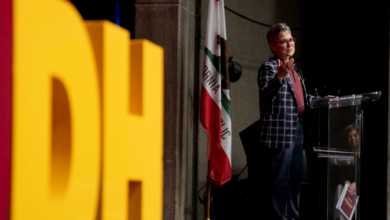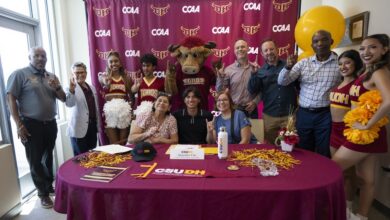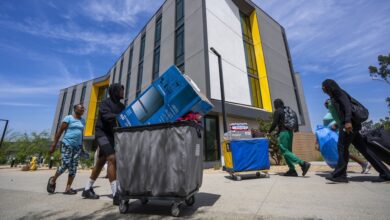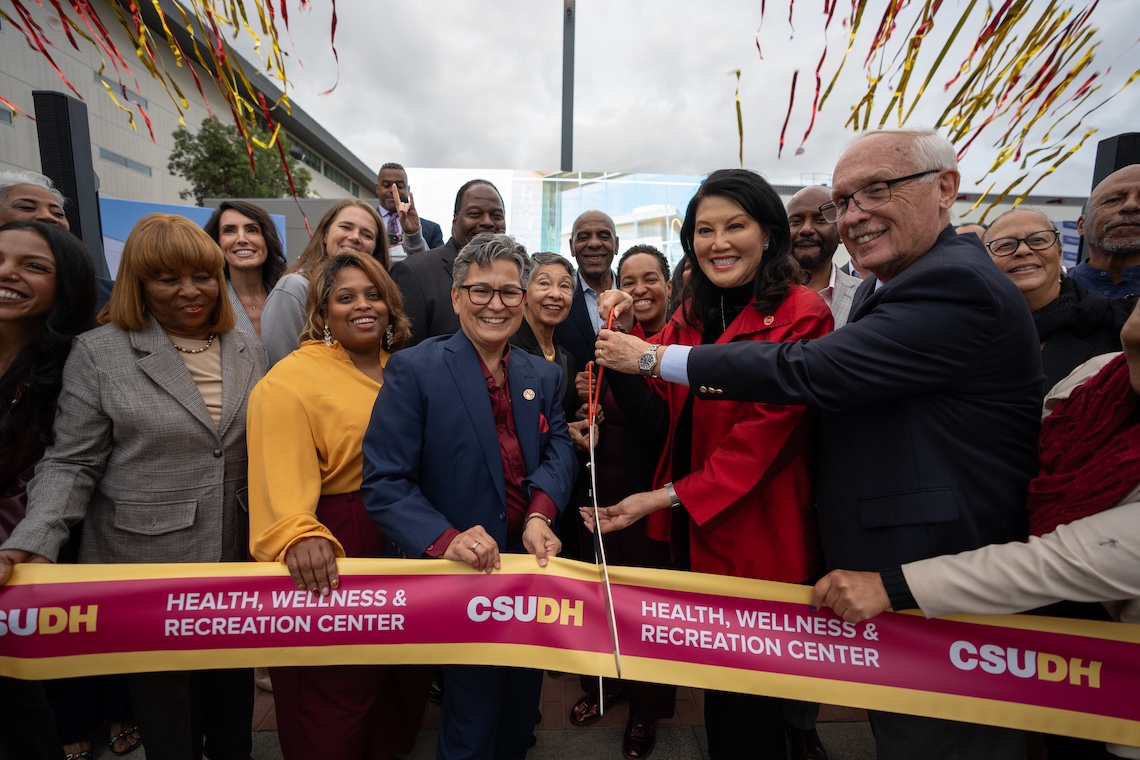
A festive atmosphere was the order of the day on Thursday, Oct. 29, as the Toro Community came together to celebrate the official opening of five new campus facilities. As the event’s emcee, Communications Assistant Professor Larry Hygh, put it, “If you’ve ever wondered how many ribbons one university can cut in one afternoon, you are about to find out!”
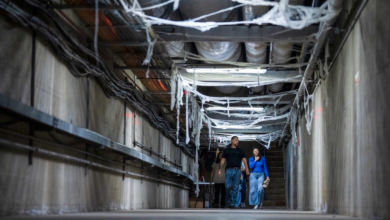
The ceremony marked the official openings of the Health, Wellness & Recreation Center (HWRC), Dining Commons, Residence Hall Phase IV, Orthotics & Prosthetics Science & Technology Hub, and the improved Electrical Switchyard and Electric Vehicle (EV) Charging Stations.
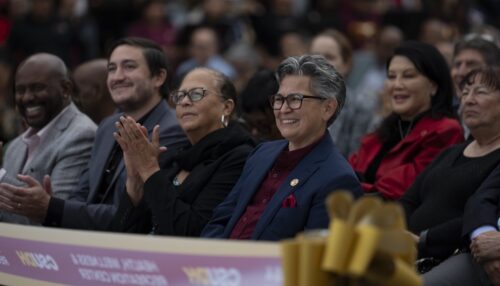
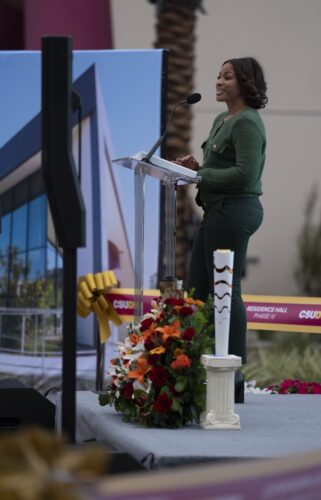
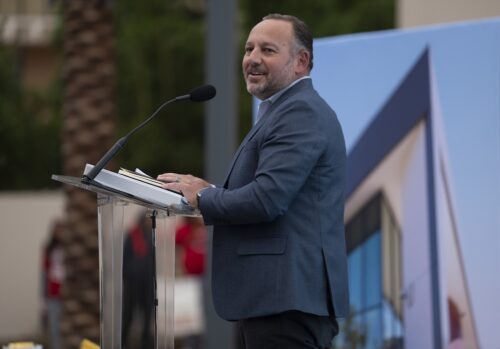
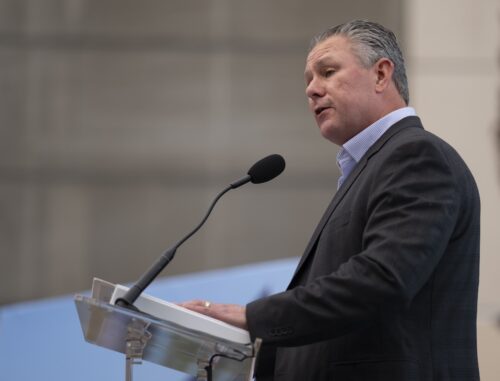
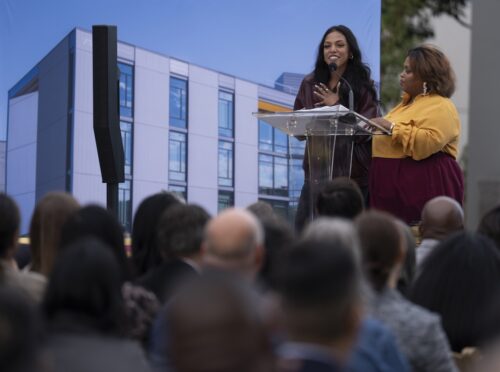
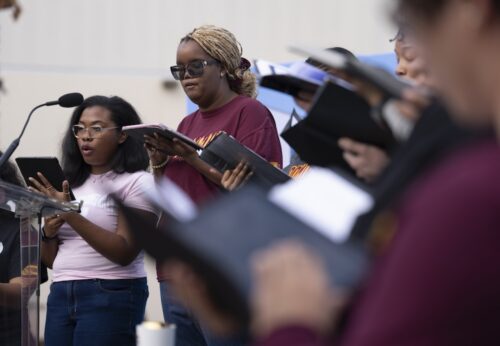
CSUDH administration, faculty, staff, students, stakeholders, and members of the local community gathered together in the newly-christened Gil Smith Memorial Plaza in front of the HWRC for the early evening program. Hygh started the event off with an acknowledgement of the land’s historic connection to the Tongva/Gabrielino people, then added some context to the moment with his opening remarks.
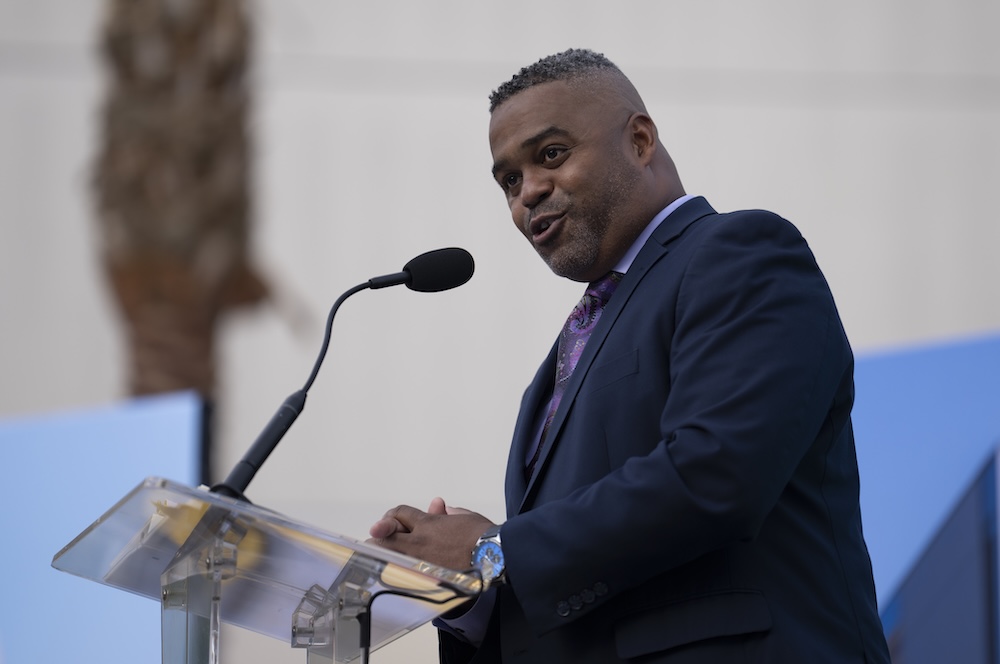
“A ribbon cutting ceremony marks the moment a door opens,” said Hygh. “Today, we are opening many doors at once. Doors that will welcome students home. Doors that will lead to new knowledge, healthier lives, stronger communities, and bolder ideas. Doors that invite connection, creativity, and possibility. Each of these new spaces represents a promise that our students will find the resources, inspiration, and sense of belonging they need to thrive.”
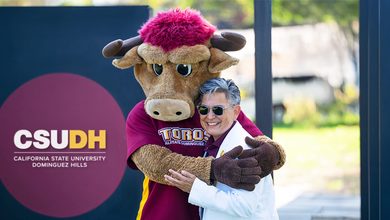
CSUDH Interim President Mary Ann Villarreal then took the stage, thanking the multitude of individuals and organizations who have partnered with the university to help make the new buildings a reality, from the alumni who led the charge as students to create the HWRC to the state representatives who pushed for funding for the facilities.
The buildings all share “a commitment to serve and meet the needs of students who live, study, and learn here every day,” said Villarreal. “When you have a safe, affordable place to rest your head at night, when you have easy access to healthy food, you can focus your energy on your studies.”
“When you have a space on campus devoted to the physical, social, and emotional well-being that sends a signal to the students that it is not only OK to take time to prioritize those aspects of their lives, but it is encouraged and even essential.”
“Today is about growing the university’s footprint [in a way] that goes way beyond the physical locations of the facilities,” she continued. “We are now expanding to elevate and center wellness and well-being for students, so that when we say we are committed to those things, it’s not just words.”
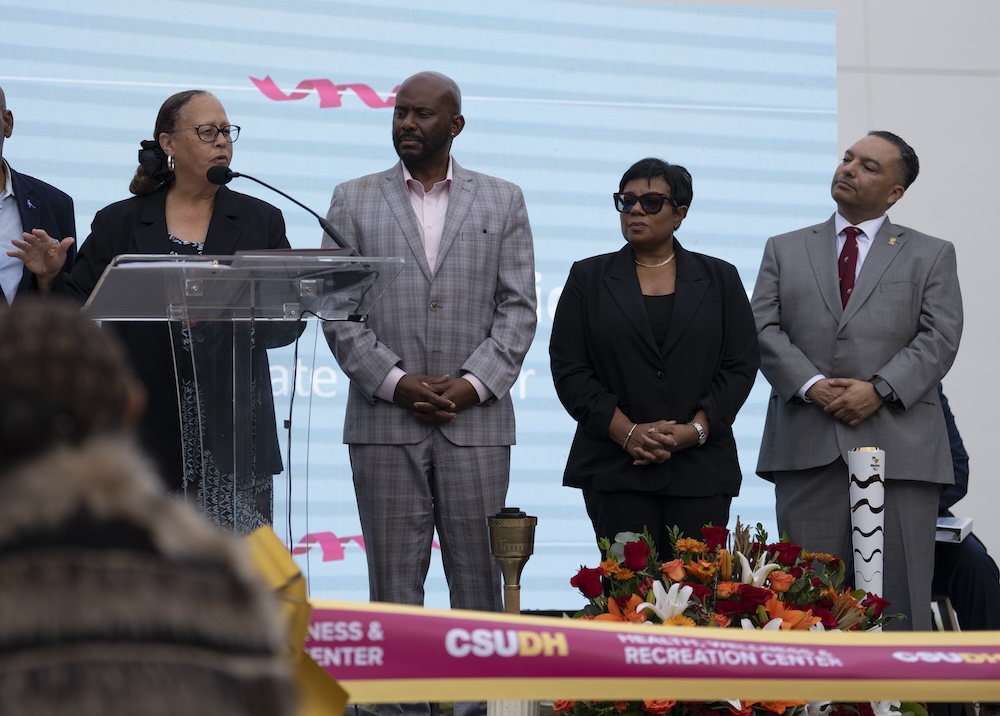
During her speech, California State Senator Laura Richardson invited other elected officials onstage with her to highlight their contributions. She pointed out the importance of the California Legislative Black Caucus in pushing for funding, and remarked that, “A part of why CSUDH is so successful is because you work together.”
Richardson closed her remarks by saying, “On behalf of the state of California, we stand united, supportive, and let’s keep the lights on and build more buildings!”
“This is a great day in the City of Carson!” said Carson Mayor (and CSUDH alumna) Lula Davis-Holmes. “I come today wearing two hats, one as the mayor of this great city, and one as a proud Toro. I live, work, play, and pray in the city of Carson. This is where I call home. As I look around, I say, Cal State Dominguez Hills, you’ve come a mighty long way!”
Other speakers included CSUDH Vice President of Student Affairs Tiffany Herbert, ASI President Chauncey Williams, and representatives of C.W. Driver Companies, BNB Builders, and Southern California Edison, who spoke on the challenges and opportunities of construction state-of-the-art, sustainably-minded facilities on campus.
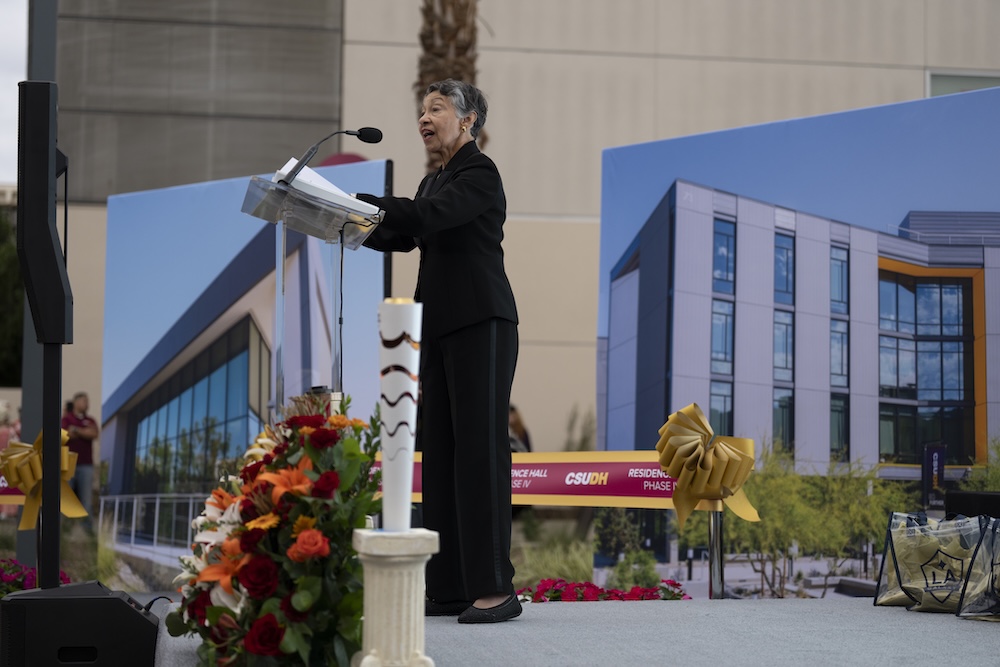
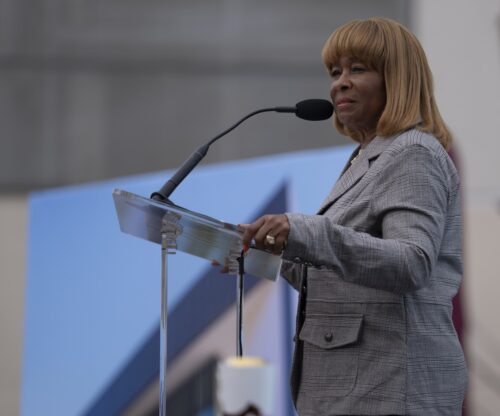
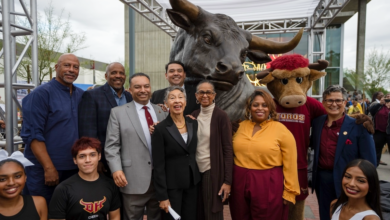
The speeches concluded with a moving appearance from Shirley Smith, the widow of the late Gilbert “Gil” Smith, an icon of the South Bay community and devoted friend and supporter of CSUDH. A member of the first city council of Carson, he also served as the city’s first Black mayor and chaired the committee that worked to establish CSUDH in the newly founded city in 1968.
Mrs. Smith recalled Smith’s work in helping to locate the university in Carson, and his tireless support of CSUDH’s efforts to bring accessible and affordable education to the people of the South Bay. She then helped lead the unveiling of the majestic toro bull statue that now stands in front of the HWRC, which was funded through the generosity of the Smith family.
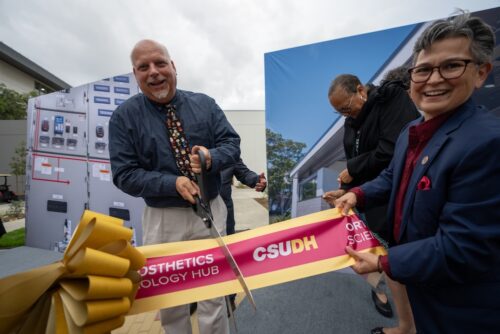
That burst of excitement carried through to the program’s last event, the “relay ribbon cutting” for the five new facilities. As Hygh led the countdowns, teams from each building used oversized scissors to cut ceremonial ribbons and officially open them for business.
The program was followed by a reception outside the HWRC, where the Toro Community shared refreshments and reflected on a job well done.