The 2026 Faculty Awards Reception was held on April 28, with five members of the CSUDH faculty receiving honors for their contributions to the university. The awards are presented each year to selected faculty members for outstanding achievement in a variety of areas—from research and scholarship to lecturing and service to the community.
The 2026 CSUDH Faculty Award recipients are:

Andrew Kalaidjian
Presidential Outstanding Professor Award
Andrew Kalaidjian is an associate professor in the English department. He joined the faculty at CSUDH in 2016, after earning his PhD in English from UC Santa Barbara.
“It’s an honor to be a part of such a vibrant campus,” says Kalaidjian. “Ten years in, working as a professor remains an exciting challenge, and I try my best to improve over time.”
Kalaidjian has been awarded the 2024 Presidential Outstanding Professor Award, which honors CSUDH individuals for their teaching, commitment to their desired field, and service to the campus and CSU system.
He currently teaches classes in world literature, modern British literature, and the environment in literature and culture. He also occasionally takes the lead on other special topic courses such as Literature, Media, and Technology.
Kalaidjian’s research and teaching focus on 20th and 21st century British and global Anglophone literature, environmental history, spectacle, and technology. His most recent book, Spectacle Earth: Media for Planetary Change, focuses on artistic, literary, and technological depictions of the climate crisis from the 1960s to today, and how these representations have influenced public response.
“I know that winning this award has only been possible because I have had great support from the university, faculty members in the college, students, friends, and family,” says Kalaidjian.
Mike Karlin
Excellence in Research, Scholarship, and Creative Activity
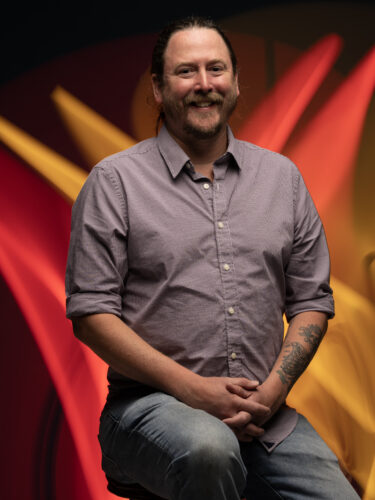
Mike Karlin is the chair and associate professor in the Liberal Studies department at CSUDH. He also serves as the director of the Snap Inc. Institute for Technology & Education (SITE).
Karlin’s work centers on addressing critical equity gaps and broadening participation in STEM fields, specifically computer science. “Computer science as a field has a long history of being an exclusionary discipline,” he says. “My research focuses on changing that reality and shifting who has access to and opportunities in computer science education.”
Since starting at CSUDH in 2021, Karlin has helped secure over $7 million in funding to address critical equity gaps in STEM and computer science education. His research work involves cross-disciplinary teams of students, staff members, post-doctoral scholars, local teachers, and more.
“This collaborative group of scholars is addressing an important issue,” says Karlin. “Equity gaps in these fields impact not only our local students, but students across the nation.”
The Excellence in Research, Scholarship and Creative Activity Award was established in 2004 to acknowledge that research, scholarship, and creative activity are essential components to the CSUDH mission.
Although he usually teaches STEM courses, Karlin is currently the instructor in the university’s new Artificial Intelligence Integration certificate program, helping local elementary and high school teachers increase their AI literacy.
Winning the award “means the world,” says Karlin. “And it absolutely would not have been possible without a massive amount of support from my mentors, students, staff, colleagues, and partners. I’m so grateful for the people I get to do this work with.”
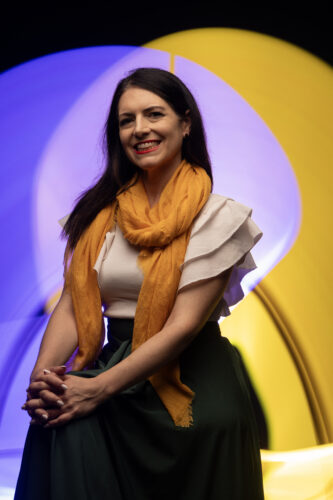
Iara Mantenudo
Excellence in Service Award
Iara Mantenuto is an Associate Professor of Linguistics who has been at CSUDH since 2019. A proud first-generation student, she holds a Ph.D. in Linguistics from UCLA.
Her research focuses on Upper Southern Italian languages and Mixtec languages. She recently partnered with community members of San Sebastián del Monte on a three-year study funded by a National Science Foundation grant. Mantenuto traveled with CSUDH students to the Mexican state of Oaxaca to preserve the endangered indigenous language there by documenting and studying local plant life.
The Excellence in Service Award recognizes faculty contributions to university governance and development, and acknowledges that service and partnership are an essential component of CSUDH’s mission.
She strives to support first-generation students like herself, and helped create the First-Generation Community for Linguists at the Linguistic Society of America. Mantenuto also mentors students through the Chancellor’s Doctoral Incentive Program and the CSU’s Pre-Professional Program.
“I’m both humbled and extremely appreciative,” Mantenuto said in accepting the award.
Mantenuto believes in the importance of international travel and exposure and recently collaborated with the International Office to create the first Florence Abroad Semester for students. She also chairs the Academic and Fiscal Affairs Committee for the Academic Council on International Programs at the CSU Chancellor’s Office. Mantenuto has previously been awarded the Certificate of University Teaching from Syracuse University, and both the Mellon Teaching Fellowship in Teaching Excellence: Inclusive Classroom and the Distinguished Teaching Award by the Linguistics Department at UCLA.
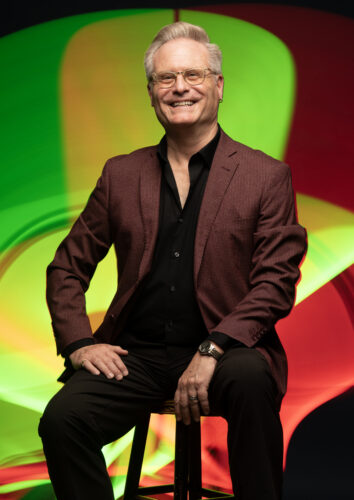
Rik Noyce
Catherine H. Jacobs Outstanding Faculty-Lecturer Award
Rik Noyce has been a lecturer in the CSUDH Music Department since 2012. A world-class flutist, Noyce has taught a wide range of courses during his time at Dominguez Hills—from Music Theory and Music History to Woodwind Methods and Marching Band Techniques. He also leads private sessions for flute and oboe students.
“My path as a musician and educator has been circuitous,” says Noyce. “I channel my experiences into my teaching, my dedication to transformational personal and academic growth, as well as my commitment to social justice. It’s my daily hope that what I do truly makes a difference for our DH community.”
For his efforts both inside and outside the classroom, Noyce has been named the Catherine H. Jacobs Outstanding Faculty-Lecturer for 2026. The award acknowledges and honors a CSUDH full-time or part-time lecturer who has demonstrated excellence in teaching effectiveness to the CSUDH campus community.
“I believe that my being named this year’s recipient of the Jacobs Award is because my personal daily intentions have been activated, recognized, and appreciated by the faculty, students, and staff here at DH,” says Noyce. “I consciously work to help build and support our next generation of thoughtful, informed, and caring citizens and artists.”
Noyce’s scholarship focuses on the transformative impact of music in life and community, including the contributions of marginalized peoples to Western art music, including the LGBTQIA+ community, women, and BiPOC composers.
As a performer, Noyce has presented many performances around these themes, including co-creating a commemorative LGBT Symposium in 2018 at CSUDH. He actively commissions and presents new works, including recent projects in responses to the tragic death of Matthew Shepard, the global COVID-19 pandemic, the Russian invasion of Ukraine, and last year’s devastating Los Angeles wildfires. Due to these efforts, performances, and recordings, Noyce was named a national finalist for the 2025 American Prize in Music Performance.
“I am utterly honored to have my efforts and contributions be recognized,” says Noyce. “Hearing that I’d been named recipient was truly special and resonated as a genuine communication of the connection with my students, my art, and my community. I feel as if this is a small testament to the trust that has been placed in me and reminds me that the ‘human element’ of teaching is what truly matters.”
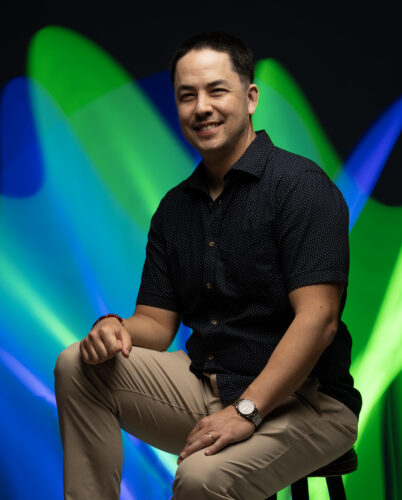
Kerry Shannon
Lyle E. Gibson Distinguished Teacher Award
Assistant Professor of History Kerry Shannon may have been named the winner of this year’s Lyle E. Gibson Distinguished Teacher Award, but he feels the prize represents something more.
“I see this award not as an individual one, but as a larger acknowledgement of teaching in the humanities,” says Shannon. “As humanists, we endeavor to instill in our students critical thinking and the ability to distill and interrogate broad swaths of information. There is no standard empirical measure of good teaching, so to me, this award is a broader recognition of the value of the humanities during a time when we must continually justify our scholarship and teaching.”
Shannon has been at CSUDH since 2020, teaching courses on the history of East Asia (China, North and South Korea, and Japan), as well as World History and a course titled “World History for Teachers.”
His scholarship primarily centers on hygiene. “I study toilets,” as Shannon puts it. “Especially toilets in Japan in the twentieth century. The scholarship is part of my broader interests in the intellectual history of hygiene and public health in East Asia.”
Named in honor of Lyle E. Gibson, the late founding Vice President for Academic Affairs, the Distinguished Teaching Award acknowledges faculty who demonstrate a mastery of their subject matter, an understanding of broad areas of knowledge, a deep and active interest in student success, and the ability to engage students in new and creative ways.
“This award means that the College of Arts and Humanities and the Department of History provided me the opportunity and the intellectual and pedagogical freedom and support to develop my teaching,” says Shannon.
“The award also reflects my family’s generosity with their time as I worked on ‘teaching innovations’ such as how to better introduce students to China’s Song dynasty, fine-tuning samurai-related dad jokes, and using poor imitations of Usher’s dance moves to explain Korea’s Joseon era,” Shannon laughs.
For Shannon, teaching at CSUDH has been a special experience. “Many other universities parade ideals of multiculturalism, diversity, and economic mobility, but CSUDH manifests and celebrates those principles unlike any other institution I’ve attended or worked at,” he says. “Students here don’t take the privilege of higher education for granted.”