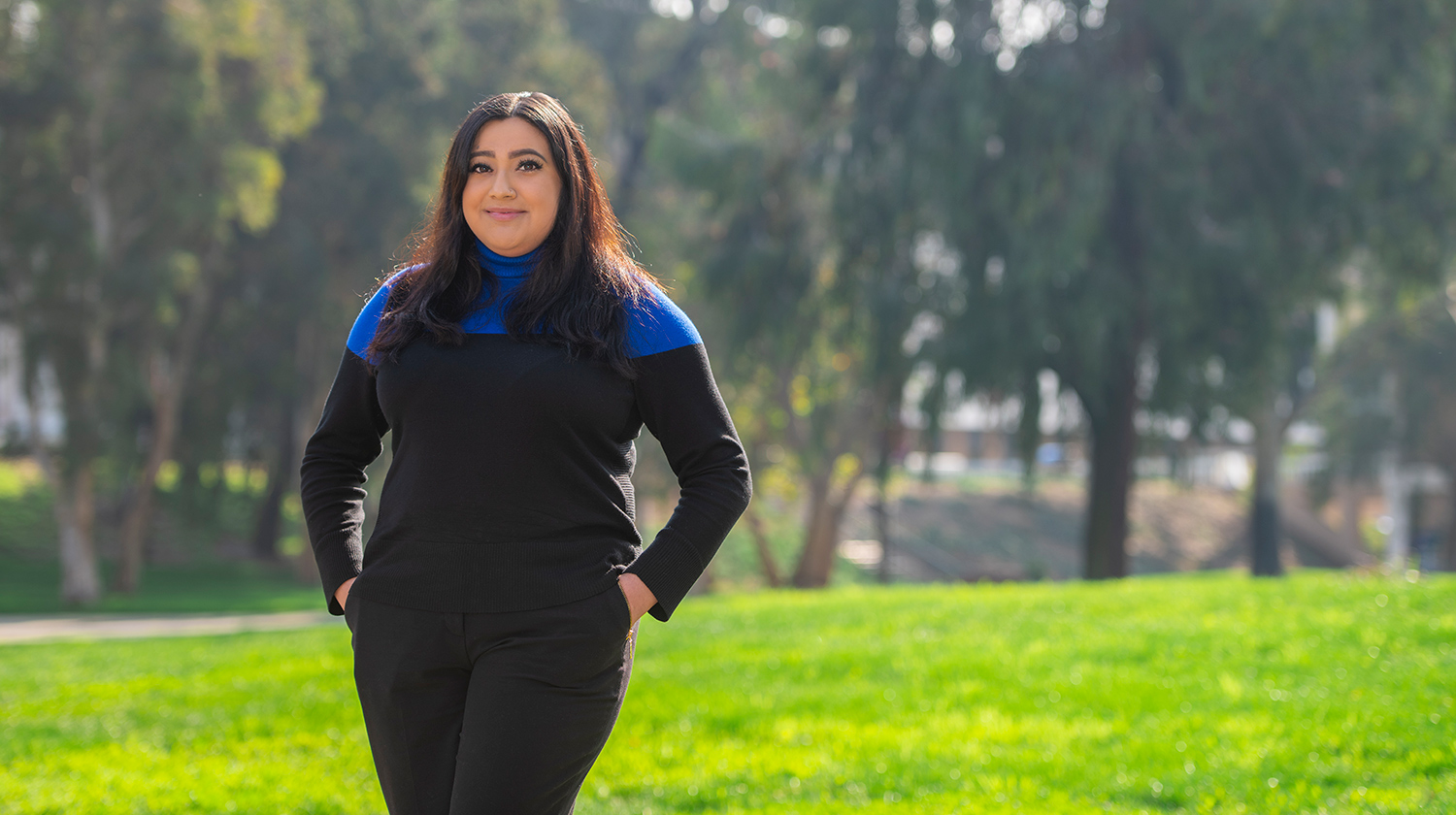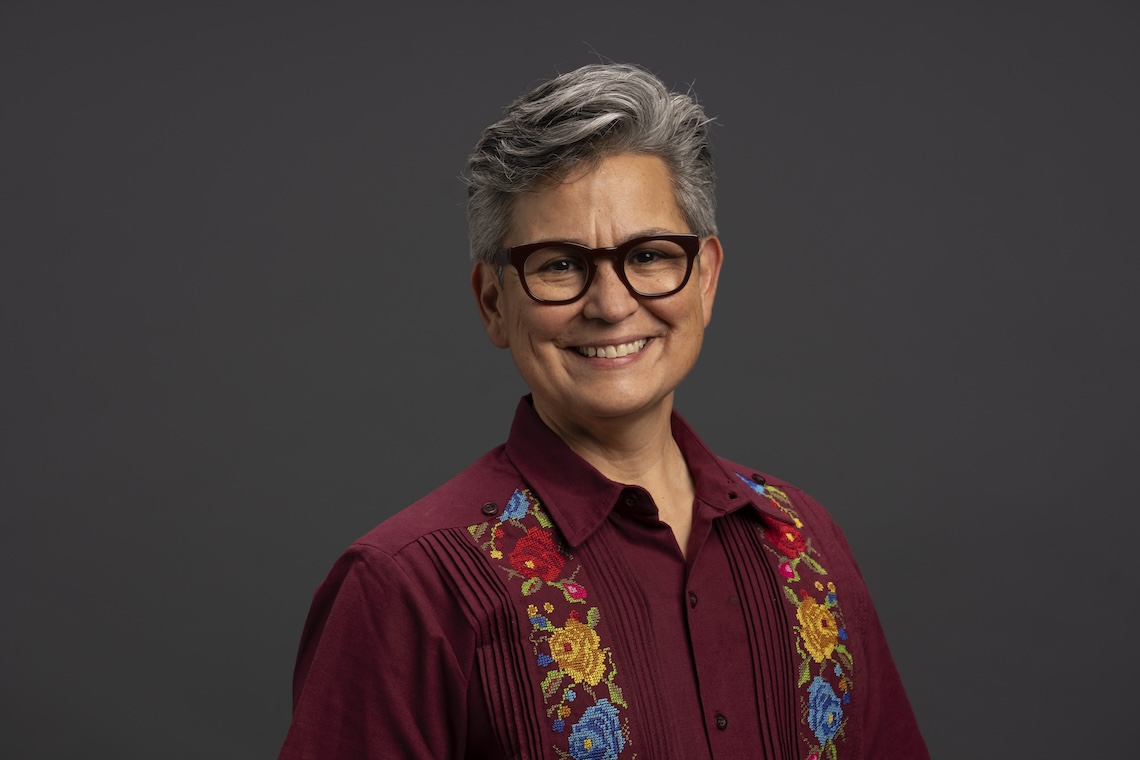
To help introduce herself to the Toro Community, Interim President Mary Ann Villarreal shared her thoughts on the university, her background, and her role at CSUDH.
What are your early impressions of CSUDH?
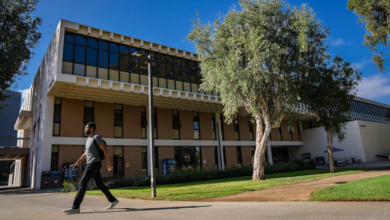
My impression is that people genuinely love this campus, and that love shows up in the care and intention behind what they do each day. For example, every morning as I walk onto campus, I see Fernando Goncalves tending to the grounds with such attention to detail and quiet pride. Seeing that level of care urges me to bring the same thoughtfulness and purpose to my own work.
What has stood out to me most is how warmly I’ve been welcomed. Wherever I go on campus, people stop to talk, not only because I’m the president – telling me about things they think I can fix (laughs) – but simply because they want to connect, to say hello.
That kind of openness matters. There is a genuine desire here among students, faculty, and staff to see one another and to be seen. CSUDH does not feel anonymous. I’ve been on many campuses where people pass by without acknowledgment. Here, most people don’t just walk by, they engage.
How did your upbringing and early family life shape your values and influence your life’s trajectory?
I grew up in a small town in Texas where everybody had permission to guide me, direct me, discipline me, scold me, keep an eye on me. While when you’re a teenager, that’s not ideal (laughs). But what I understand as an adult is that I was never out of sight.
My grandparents owned a bar and they had me go there after school and do my homework. Our town was surrounded by farms and ranches, so most of the people in the bar were field laborers. I was taught to know each of their names and about their families. And they were always so proud of me! They always made sure I was doing my homework, asking me questions about what I was learning. My upbringing included a level of encouragement I didn’t know that I would need.
There are a lot of things about my upbringing that weren’t kind or easy. But my grandmother was always building a path out for me. My grandmother and my sister protected me. Even though we didn’t have a lot, they always made me feel like I had the world. I think in many ways, that’s the spirit I’m trying to bring to CSUDH.
Higher education is having a hard time right now. People’s lives are at stake in many ways. So part of leading this institution is also making sure we don’t let people get far away from us. Our students come here for a degree. They do not come here to fail. They come here because they know there is something better waiting for them, and we are the people that deliver on that hope.
How does your background as a historian influence your leadership style?
As a public historian and oral history interviewer, I’ve learned that there are cycles of change. Understanding those cycles of change, understanding the times in which we’re living, is part of my toolkit as an oral historian. The same tools for contextualizing and reflecting that served me as an oral historian and practitioner continue to serve me as I have moved into leadership roles.
My job is to listen and to make sense of how people’s individual stories fit into the DH story. It’s also my role to understand where people are in the context of time and place, what they know, what has hurt them, what has brought them joy, what has brought them meaning in their community. Context matters. It’s my job to understand the full context of the moment, so that we don’t get drawn back into the past.
The reflective practitioner in me requires that I pause and reflect on what I’ve done at the end of the day, but on a different human kindness level. Where might I have done something to cause harm that I need to repair? Do I need to pick up the phone and talk to this person?
Can you tell us a little bit about your service in the Air Force? Why did you want to serve? How has it impacted you going forward?
My grandfather did not think as highly of college as my grandmother did. He had the idea that the more education people had, the less common sense they had. He really had this entrepreneurial spirit and he thought that I would make more money if I started a business hauling fruit seasonally. But I had no interest in doing that.
I needed to get out of Texas. Bottom line. I’m this young queer kid in a very small town…everybody knew that I needed to find a life somewhere else. So a cousin helped me look at colleges in Massachusetts. I joined the Air Force while I was still in high school, hoping that it would help my grandfather accept my college aspirations.
It so happens that the college I selected, Mount Holyoke, and the Air Force base were just a town apart. I had no idea. That was a total coincidence. But it allowed me to serve in the reserves at the same time as I was going to college.
The experience did a couple of things for me. I agree with my grandfather. I lacked discipline. So it gave me a sense of discipline, which has been a great tool for my life.
It also made me come to terms with some of my own internal conflicts. I grew and flourished in the structured environment of the Air Force, but was struggling in college. The Air Force gave me a sense of belonging and a sense of commitment.
It helped build a confidence in me that I needed. I knew how to work with my hands. I had not yet learned how to take my thinking and translate it in ways that were academic.
The help and encouragement of my professors and mentors at Mount Holyoke College combined with the discipline of the military to help me bridge that gap and discover my path. Their wise, hands-on direction of my academic journey, combined with the support of my master sergeant helped convince me I could succeed in both venues, that I could carry both.
What does being a first-generation college graduate mean to you?
People sometimes ask why I bring this up so often, and why it matters. It matters because my grandmother gave up everything to make sure I had an education. She gave up 18 years of her life to put my life in a different direction.
I didn’t know at the time, but I think she also realized that I would be her caregiver, financially. So she also put me on a path to economic responsibility. And that’s why I think it’s important. It’s important not because every first-gen experience is the same. But as a first-generation graduate, I carry economic responsibilities with me.
I need us to remember that when we’re the first, we carry different kinds of responsibilities to our families and a larger ecosystem of our parents, our grandparents, and our siblings.
My grandmother passed away a few years ago, but until then, my money carried with it the responsibility of taking care of her, as it did to take care of my mother, who came under our care when my youngest was a year old. So it wasn’t really “my” money. It was the money of the people who raised me. That was my responsibility.
First-gen isn’t about whether I’m smart enough or good enough or anything like that. It means that I just carry a different kind of responsibilities, responsibilities that are invisible to most people.
Is there anything else you would like the Toro Community to know about you?
I’d like them to know that I’ve truly fallen in love with this community.
I want people to know that I’m built for this 24/7. That doesn’t mean I work 24 hours a day, but, like all presidents, I’m always on duty. Let’s be clear. If something happens on campus, day or night, I’m ultimately responsible. I’m built for that part. I’m in this.
In the end, I’m on the ground to lead and prepare CSUDH for the future. But I also want to stress that this isn’t all about me. I’ve got a strong team working with me and I want to build up the leaders who are already here.
I think it is important for me to share that I have a partner, and she is a scholar herself – she’s the Josephine Berry Weiss Chair of the Humanities at Penn State. We have two children, fiercely independent and amazing humans. I am grateful that they have made the space for me to give and to lead this community.
In early January, my oldest joined me at a men’s and women’s basketball doubleheader. She sent me a text later that week that expressed how much now she understood that giving up time with me was important to many others. This campus does not just have me, it has my family invested in uplifting us to what is possible.
I have been walked to this moment by many people who taught me not to be foolish, but to be unafraid. That’s been a gift for me, and a gift that I hope I can return to this community.